
Looking for the best tools to collect and analyse feedback for your SME's AI systems? Here's what you need to know:
AI-driven feedback tools can transform how small businesses improve customer experiences with AI support. From Google Forms with AI add-ons to advanced platforms like Qualtrics XM, these tools simplify feedback collection, provide sentiment analysis, and integrate seamlessly with your existing systems. Whether you're working with a tight budget or need enterprise-level insights, there's an option for you. For help choosing the right tech stack, consider professional AI consultancy to align tools with your business goals.
| Tool | Starting Price | Key Features | Best For |
|---|---|---|---|
| Google Forms | Free | AI add-ons, integrations | Small businesses on a budget |
| Typeform | £21/month | Conversational surveys, AI insights | Design-focused feedback collection |
| SurveyMonkey Genius | Free–£50/month | Sentiment analysis, AI summaries | Teams handling larger feedback volumes |
| Hotjar | Free–£49/month | Heatmaps, live tracking | User behaviour analysis |
| Qualtrics XM | £3,240/year | Advanced AI, real-time alerts | Enterprise-level insights for SMEs |
| UserVoice | £12,960/year | Revenue-linked feedback | Prioritising high-impact features |
| Delighted | £15/month | Sentiment analysis, simplicity | Start-ups and small teams |
| Feedback Fish | £15/month | Easy setup, multilingual support | Simple feedback collection |
| Mopinion | £235/month | Advanced analysis, GDPR compliance | Comprehensive feedback management |
Start small with free or low-cost tools, test their features, and upgrade as your needs grow. The right tool can turn customer feedback into actionable insights, helping your SME refine its AI systems and boost customer satisfaction.
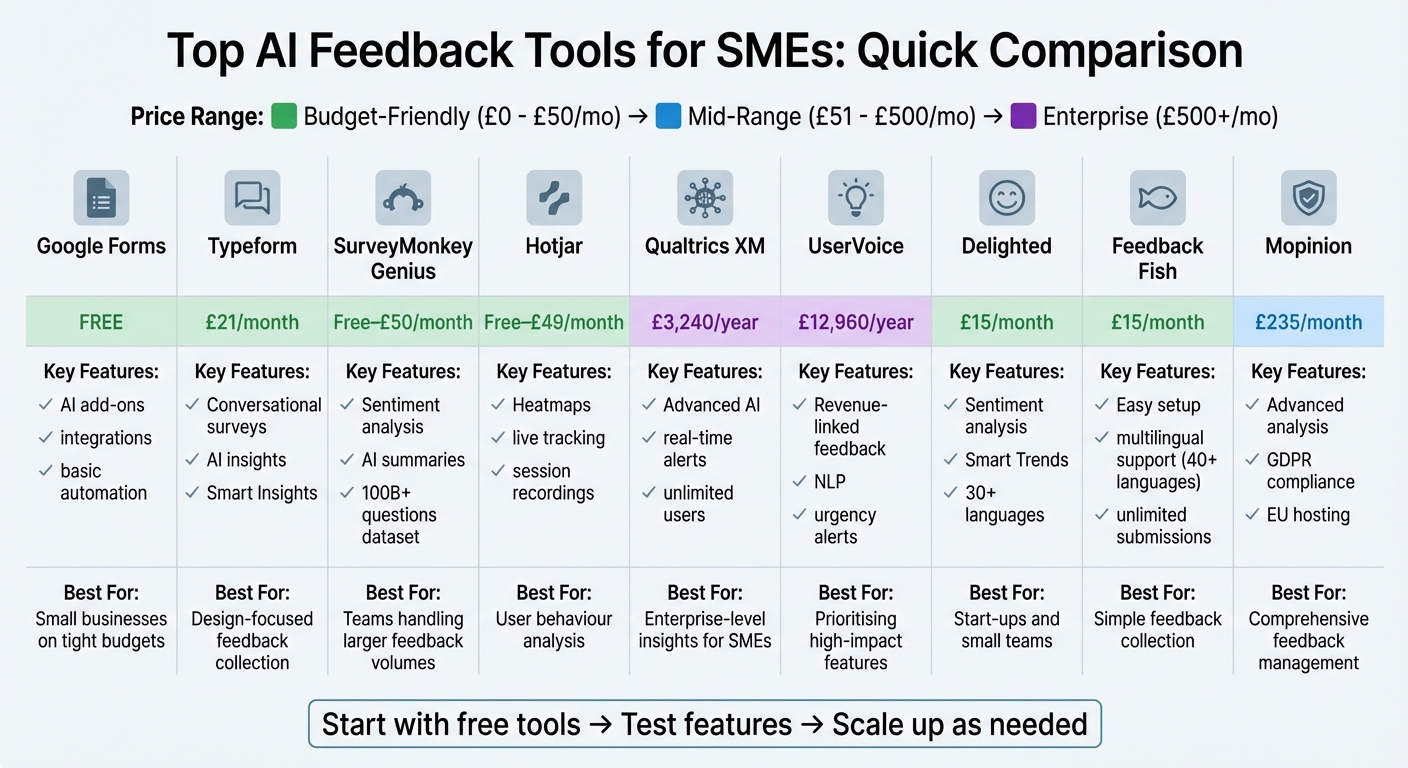
AI Feedback Collection Tools Comparison for SMEs: Features and Pricing
For small and medium-sized enterprises (SMEs), collecting meaningful feedback is key to refining AI systems. Google Forms, paired with AI add-ons, offers a practical way to achieve this. On its own, Google Forms is a simple, free tool for feedback collection. But when enhanced with AI integrations, it becomes a powerful system capable of analysing sentiment, scoring leads, and even processing data through natural language queries.
Google Forms’ native AI features can suggest ways to improve your questions, ensuring they’re clear and boosting response rates. Add third-party tools, and you unlock even more advanced capabilities. Michael Toth, an Automation and AI Consultant at Snowline Automation, highlights the potential:
"Every new submission gets instant analysis before landing in Google Sheets, so you can automatically add structured insights and feedback to your data."
For example, connecting Google Forms to large language models like Claude via Zapier allows you to assign scores (0–100) to feedback based on specific criteria. Responses scoring above 70 could trigger immediate Slack notifications, ensuring high-priority feedback gets attention. BuildShip takes this further by creating "feedback assistants" using OpenAI. These assistants can answer questions like, "Which section needs the most improvement?" directly from your stored data.
Google Forms is free for anyone with a Google account. The AI Form Builder add-on, which has been downloaded over 2 million times, offers basic features at no cost, while advanced options like PDF conversion require a premium subscription. Zapier provides a free tier for basic automation, and BuildShip offers a free starting plan for building AI workflows . Even for more advanced analysis, setting up an Anthropic (Claude) API account can cost as little as £4, making these tools accessible for SMEs.
Google Forms integrates effortlessly with Google Sheets, Docs, and Drive, streamlining response management within Google Workspace . For SMEs using external platforms, Zapier bridges the gap, connecting Google Forms to over 8,000 apps and more than 450 AI tools. Whether it’s CRMs, communication tools, or project management software, this no-code approach enables SMEs to build workflows without needing technical expertise. These integrations make it easy to transform raw feedback into actionable insights, laying the groundwork for even more advanced tools tailored to AI-driven feedback collection.
Typeform is known for its conversational, one-question-at-a-time format that turns feedback collection into an engaging dialogue rather than a mundane task. With over 150,000 brands using it globally and 95% of the Fortune 500 relying on it, Typeform combines sleek design with AI tools to uncover deeper customer insights. Its interactive, dialogue-driven approach takes feedback collection beyond the basics.
Typeform's AI capabilities go far beyond simple data gathering. Features like Smart Insights, powered by Claude 3.5 Sonnet, use natural language processing (NLP) to detect key themes and sentiments. Meanwhile, the Clarify with AI tool generates up to two follow-up questions in real-time, tailored to respondents' answers. For instance, if someone expresses dissatisfaction with an AI chatbot, the platform can automatically ask targeted questions to understand the issue better - no need for manual logic mapping. Aleks Bass, Chief Product Officer at Typeform, highlights this efficiency:
"AI isn't about hype - it's about making work easier, not harder. Our AI helps you create high-performing forms in minutes, surface key insights instantly, and take action faster - without a steep learning curve or extensive resources."
Another standout feature is Ask AI, which allows users to query collected data using natural language. It instantly generates charts and summaries, saving time on manual analysis.
Typeform offers a free plan with limited features, while paid plans start at £21 per month for the Basic tier. This pricing makes it accessible for SMEs, though the Basic plan caps responses at 100 per month, which could be restrictive for growing businesses. That said, 87% of users report that AI automation reduces the need for manual data processing, and annual subscriptions offer up to a 16% discount. Smart Insights is included in Growth Pro and Talent Plans by default, but Enterprise users must enable AI features manually.
Like Google Forms, Typeform supports extensive integrations, making it easy for SMEs to automate workflows. This often requires careful AI implementation planning to ensure data flows correctly between systems. It connects with over 300 business tools, including Slack, Notion, Airtable, Google Sheets, HubSpot, Mailchimp, and Salesforce. Embedding forms as pop-ups, sliders, or inline elements on websites is straightforward. For more advanced workflows, Zapier integration provides access to 500+ additional tools, while webhooks and a robust API allow for custom solutions.
The Contacts & Automations add-on further streamlines feedback management. It segments audiences automatically based on AI-detected sentiment and can trigger personalised follow-up emails or Slack alerts when negative feedback is identified. As Becca Ravenna, Senior Director of Corporate Sales and Partnerships at Barry's, shares:
"We just hosted a virtual event for 60,000 people using Typeform for the bookings."
Typeform doesn't just process data - it also enhances the respondent experience in real time. Drop-off Analytics identifies where users abandon forms, so you can make immediate improvements. Interaction AI adjusts the survey experience dynamically, tweaking tone and phrasing to align with your brand's voice or simplifying language for clarity. Additionally, the AI Form Translator supports over 25 languages, helping you reach a broader audience without the hassle of manual translations.
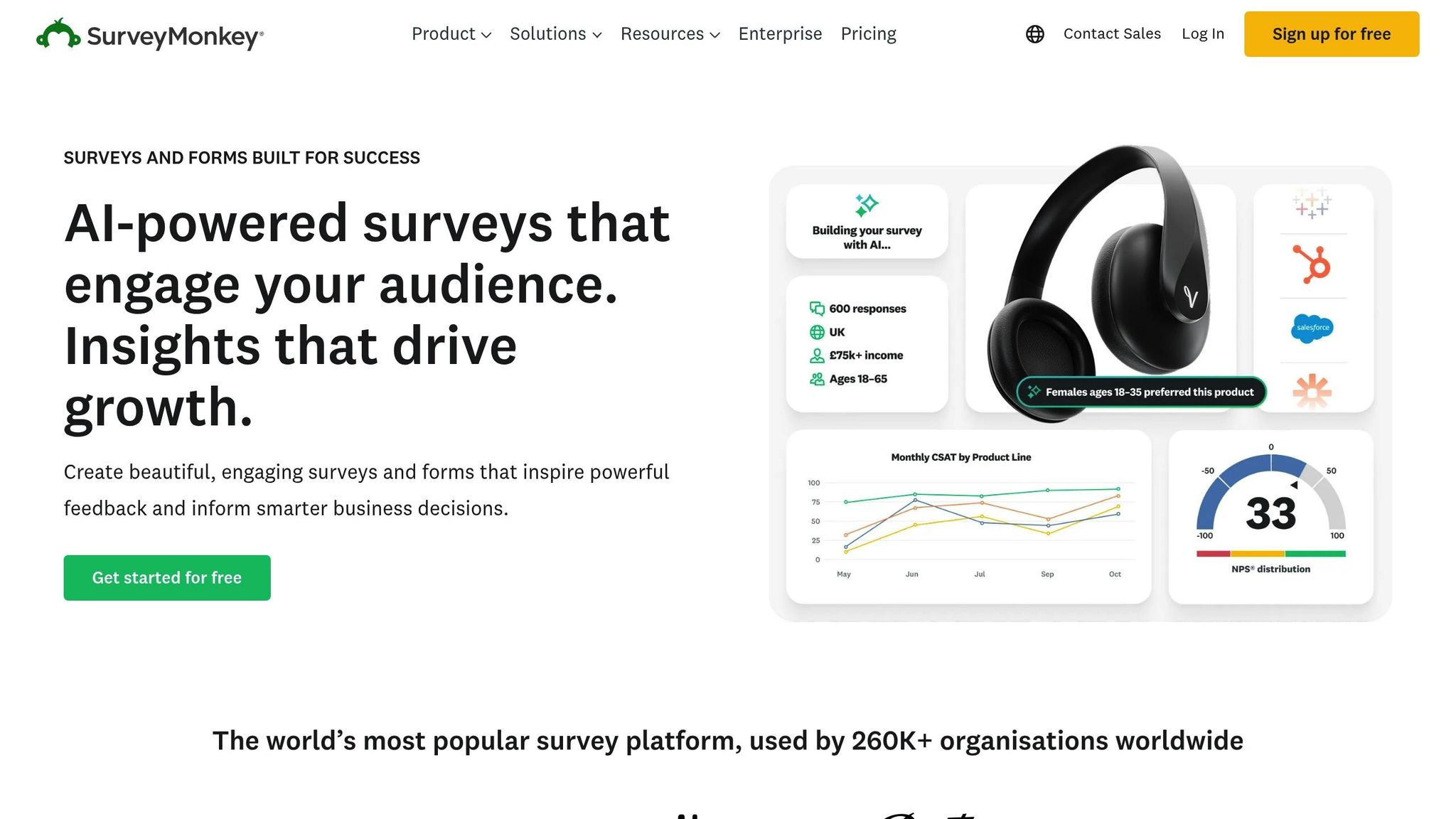
SurveyMonkey Genius brings AI-powered tools to the table, turning customer feedback into actionable insights. With over 260,000 organisations worldwide relying on its AI features, the platform leverages a proprietary dataset of over 100 billion answered questions, built on more than 25 years of survey expertise. It takes the hassle out of feedback analysis while ensuring data quality remains top-notch. Let’s dive into how its AI tools transform raw feedback into meaningful intelligence.
SurveyMonkey Genius offers an AI Analysis Suite that processes open-ended responses automatically. It categorises sentiment and identifies key themes through its Thematic Analysis feature, which groups comments into actionable categories. The Analyze with AI tool allows users to ask questions in plain English, generating instant summaries and visual charts. Meanwhile, Response Quality Detection filters out rushed or nonsensical answers using machine learning, with models updated daily using 84 million data points.
Greg Shapiro, Consumer Insights and Rewards Manager at Hornblower, highlighted the benefits:
"SurveyMonkey AI optimises our surveys. It lets me know if a question is too complicated, if the flow of a survey doesn't make sense, if it takes too long to finish. The end result is that my surveys are faster and easier to complete, and they get a much higher response rate from my customers."
Additionally, the Build with AI feature quickly generates customised surveys from a simple text prompt, while Survey Score provides real-time feedback during survey creation, flagging structural issues before surveys are sent out.
SurveyMonkey offers pricing plans tailored to suit the budgets of small and medium-sized enterprises (SMEs), making advanced AI tools accessible. Core features like Build with AI and Answer Genius are available even on the free Basic plan. For more advanced tools, such as Sentiment Analysis and the chat-based Analyze with AI, businesses can opt for the Advantage or Team plans.
Contributor seats are also available, allowing team members to access and work with data without needing full licences. Additional responses can be purchased for up to £0.12 each.
Barbara Falci, Vice President at Friends of the Sullivan County Library, shared her experience:
"SurveyMonkey's Build with AI feature made creating surveys a breeze, even for someone with zero AI experience like myself."
SurveyMonkey integrates seamlessly with over 200 business applications, including Slack, HubSpot, Mailchimp, Microsoft Teams, and Google Drive. Through Zapier, it connects to more than 7,000 tools, enabling automated workflows in CRMs and project management systems. Processing over 20 million questions daily, the platform is particularly well-suited for SMEs handling large volumes of feedback.
The platform delivers real-time results and visual charts, enabling businesses to track feedback as it comes in. Features like Smart Notifications can send alerts based on specific responses, such as a low Net Promoter Score. These tools make it easier for SMEs to address customer issues promptly, further solidifying SurveyMonkey Genius as an essential tool for improving customer experiences.
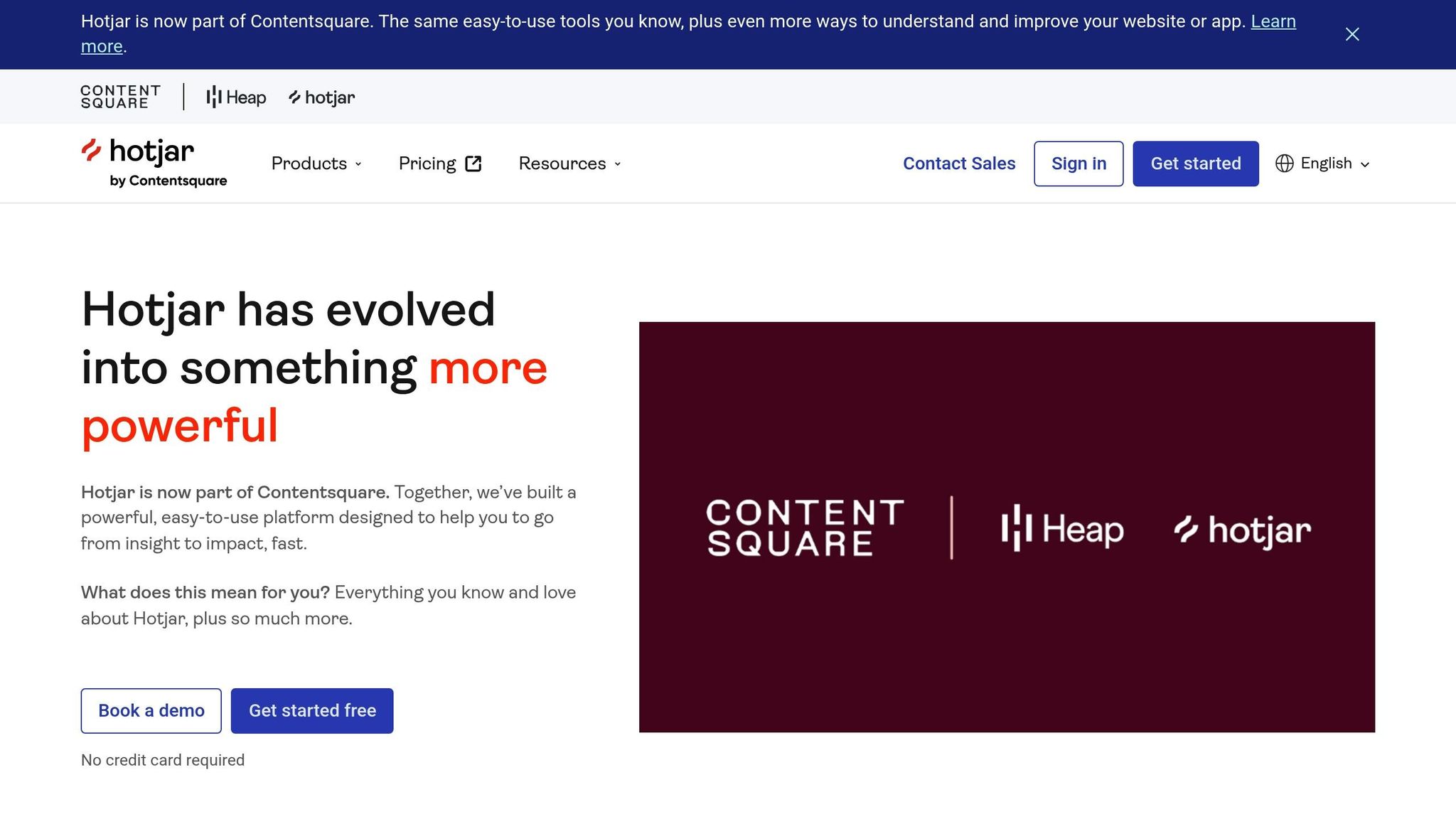
Hotjar combines heatmaps, session recordings, and AI-enhanced surveys to help SMEs improve their AI systems. With over 402 million survey responses collected and 1.3 million websites served globally, Hotjar has established itself as a reliable tool for understanding user behaviour and gathering feedback. Its visual data capabilities make it an excellent complement to other feedback tools.
Hotjar's "Sense" AI assistant simplifies research by crafting survey questions tailored to your objectives and delivering summary reports in seconds. It categorises open-text responses by sentiment automatically, saving hours of manual work. By linking feedback to session recordings, you can identify sessions that trigger negative responses. The tool even flags frustration signals like "rage clicks" and "u-turns" for immediate action.
Dave Powell, an E-commerce Conversion Manager, shared:
"The information gathered from surveys helped us make substantial changes that resulted in a +491% increase in email CTR and a +49% conversion rate increase for our landing pages."
Hotjar’s "Free Forever" plan offers unlimited heatmaps and up to 100 survey responses per month without requiring a credit card – a great starting point for small businesses. Even on this free plan, users can access the AI Survey Generator and automated summary reports. For businesses looking to expand, the Growth plan starts at £49/month (billed annually) for Experience Analytics, while the Voice of Customer features, including Sense AI and extended data retention, are available from £99/month.
Hotjar works seamlessly with popular SME tools like Slack, HubSpot, Google Analytics, and Jira. The free plan supports seven integrations, while paid tiers unlock even more options, such as Mixpanel. This ensures feedback can be incorporated into your existing workflow without any complicated setup.
Hotjar’s Feedback widget acts as a digital suggestion box, capturing user sentiment in real time. Its Impact Quantification feature links feedback directly to revenue-impact metrics, making it easier to understand how user insights translate into business outcomes.
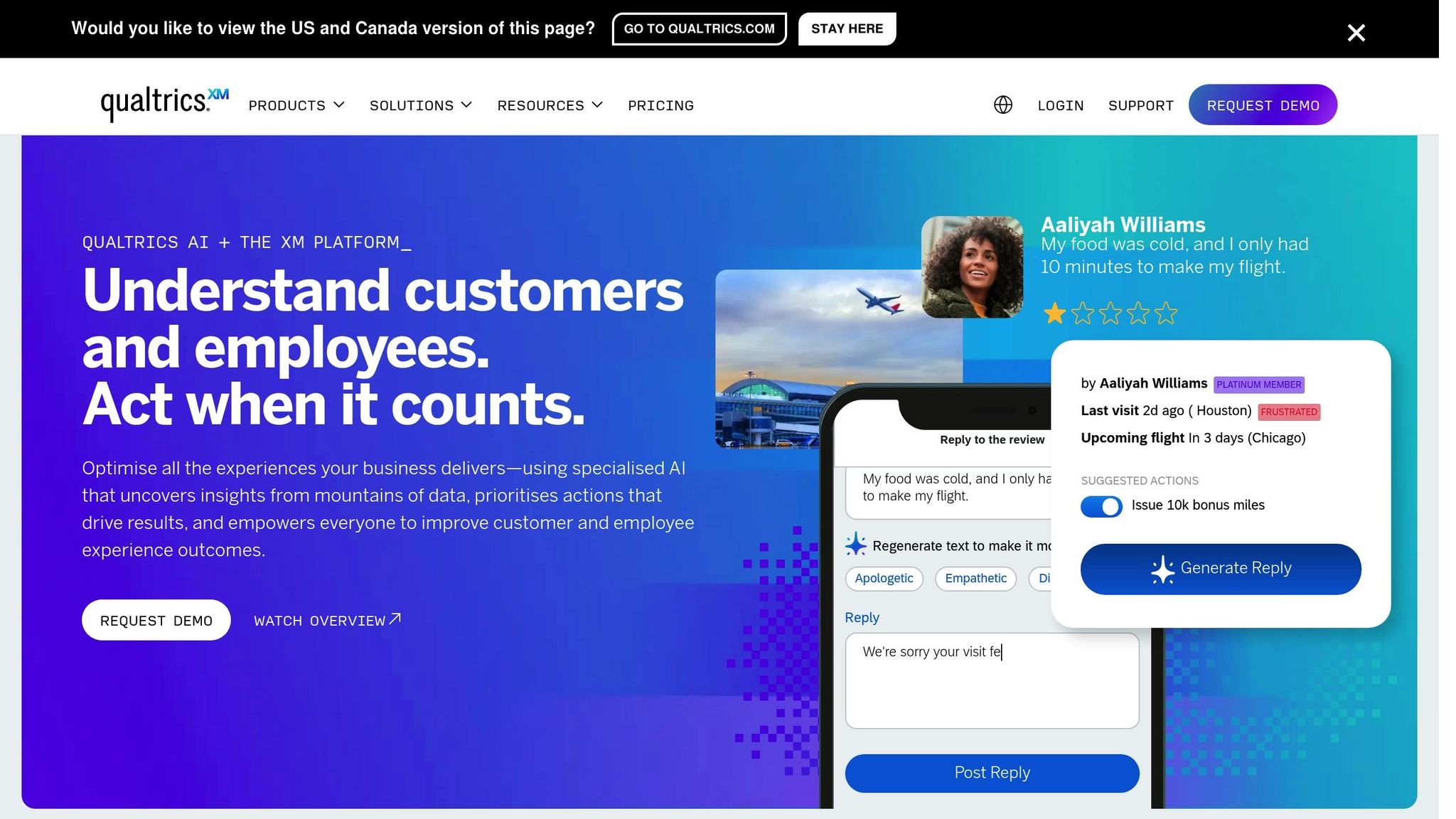
Qualtrics XM offers powerful AI-driven feedback tools tailored for small and medium-sized enterprises (SMEs), bringing capabilities once reserved for large corporations to a broader audience. Trusted by over 20,000 brands and processing over a billion surveys annually, the platform stands out for its focus on real-time feedback and seamless integration.
Qualtrics transforms basic feedback into actionable insights using advanced AI. When responses lack detail, the system prompts follow-up questions, with over 80% of respondents providing richer answers as a result. Organisations using its Conversational Feedback feature have seen impressive results: completion rates increased from 75% to 83%, open-ended responses doubled in length, and "follow-up-worthy" insights rose by 200%.
For example, TUI, a tourism group, tested this technology in July 2025. Under the leadership of Kira Drabner, Head of Voice of Customer Programme, the results were striking: 85% of customers gave additional feedback when prompted by AI, and their responses were 75% longer. This helped TUI's teams address guest concerns before checkout. Drabner summarised the impact:
"This is about human connection at scale. It's about making sure that every guest, on every journey, feels heard - and valued".
The platform's tools - Insights Explorer, Text iQ, and Experience Agents - work together to categorise sentiment, summarise feedback, and flag issues in real time. To get the most out of these features, organisations should aim to collect at least 100 responses for clearer trends.
Qualtrics offers pricing plans designed to fit SME budgets while still delivering enterprise-grade insights.
The unlimited user feature is particularly beneficial, allowing entire teams to access insights without additional charges per seat.
Sprint’s Web Analytics Manager, Mabel Acosta, highlighted the platform's value:
"Qualtrics helps us predict exactly how we need to help customers complete their purchases. Those insights are literally worth millions".
By leveraging Qualtrics, Sprint reduced cart abandonment by 22%, demonstrating the platform's potential for boosting ROI. SMEs can explore these benefits risk-free with a 30-day trial of the premium features.
Qualtrics integrates effortlessly with popular CRM platforms, support tools, and marketing automation systems, ensuring feedback drives actionable outcomes within existing workflows. The platform also uses Claude 3.5 Sonnet to assist users in building workflows and mapping data across systems.
However, enabling advanced tools like Insights Explorer requires manual activation of "third-party generative AI features" by Brand Administrators in the Organisation Settings.
Qualtrics excels in real-time feedback, using intelligent targeting and friction detection to engage users at critical moments. For instance, its Experience iD (xiD) feature monitors behaviours like "mouse thrashing" or "rage clicks" and triggers immediate interventions. Emma Sopadjieva, Head of CX Analytics, emphasised the importance of this capability:
"With Qualtrics, the moment we receive feedback we can alert the right teams to take action, to mend those relationships, to solve critical issues in real time with our customers".
These real-time responses not only enhance customer satisfaction but also improve retention. For example, Hilton uses Qualtrics AI to address guest concerns while they are still on-site, ensuring issues are resolved before checkout. Such initiatives have led to a 25% increase in account value for some users.
UserVoice offers a powerful platform that uses AI to help SMEs turn scattered customer feedback into meaningful insights. By employing Natural Language Processing (NLP), the system identifies recurring themes and uncovers new trends. Its standout feature, "AI Idea Insights", provides quick summaries that pinpoint key issues, propose solutions, and reveal user motivations, giving teams an edge in understanding customer sentiment.
The Intelligence Engine behind UserVoice transforms raw feedback into clear patterns, themes, and scores. It also includes an Urgency Alert system that flags feedback based on its emotional intensity, allowing teams to prioritise high-stakes issues that might lead to customer churn. To ensure business impact is front and centre, the platform links account and revenue data to each feedback item, helping teams focus on features that matter most. Megan Fangmeyer, Product Manager at Facts, highlights this benefit:
"Uservoice challenges me to look at the overall picture of the struggles that our customers as a whole".
UserVoice is available at a yearly cost of roughly £12,960 (about $16,000), with pricing based on feedback volume and integrations. This flat model ensures that entire teams can access insights without extra fees. Additionally, the platform offers a 30-day free trial and assigns a dedicated Customer Success Manager from the start, a helpful feature for SMEs managing large amounts of feedback.
UserVoice fits seamlessly into SME tech ecosystems, working with tools like Salesforce for customer data, Jira and Azure DevOps for engineering workflows, and Full Story to connect behavioural session data with feedback. A Technical Success team supports setup and migration, typically completing onboarding within 4–6 weeks.
To enhance its analytical strengths, the platform includes in-app widgets and contributor consoles for ongoing feedback collection. Operational insights and reporting provide a live view of new ideas, votes, and comments, while the Trend Explorer tool tracks how customer needs evolve over time. Interestingly, customers involved in feedback programmes are 20% more likely to become promoters, underscoring the value of engagement.
Capterra is a review platform designed to help SMEs collect and manage customer feedback across their products and services. With a database of over 2 million verified reviews, it provides businesses with access to a wealth of genuine insights. Plus, its AI-powered detection ensures that only reliable reviews make it onto the platform. Here's how Capterra uses AI to improve feedback analysis, streamline costs, support integration, and enable real-time monitoring.
Capterra uses Natural Language Processing (NLP) and Large Language Models (LLMs) to make sense of unstructured customer feedback. This technology identifies recurring themes - like "pricing confusion" or "feature friction" - helping SMEs pinpoint areas that need attention. Beyond just star ratings, the AI delves into sentiment and intent, spotting signs of urgency, frustration, or even subtle buying signals that manual analysis might miss.
One of Capterra’s standout features is its free listing option, which allows SMEs to establish a presence and gather customer insights without any upfront investment. Before committing resources, SMEs can also conduct AI feasibility studies to ensure long-term ROI. This is especially useful for businesses operating on tight budgets. Additionally, its shared listing network integrates data across Capterra, GetApp, and Software Advice, giving SMEs greater visibility without extra costs.
Capterra makes it easy to integrate its tools into existing workflows, offering clear comparisons and intuitive filters to guide decision-making. Features like "Best for" labels categorise tools by business size and industry, making it simpler for SMEs to find relevant feedback and understand their market standing. This is particularly beneficial for B2B SMEs and software vendors looking to leverage social proof.
The platform continuously monitors reviews and sends automated alerts for new feedback, allowing SMEs to respond promptly and address potential issues before they escalate. Capterra holds ratings of 7.3/10 on TrustRadius and 3.8/5 on G2. While users appreciate the extensive collection of genuine reviews, some have noted that the approval process for reviews can occasionally be slow.
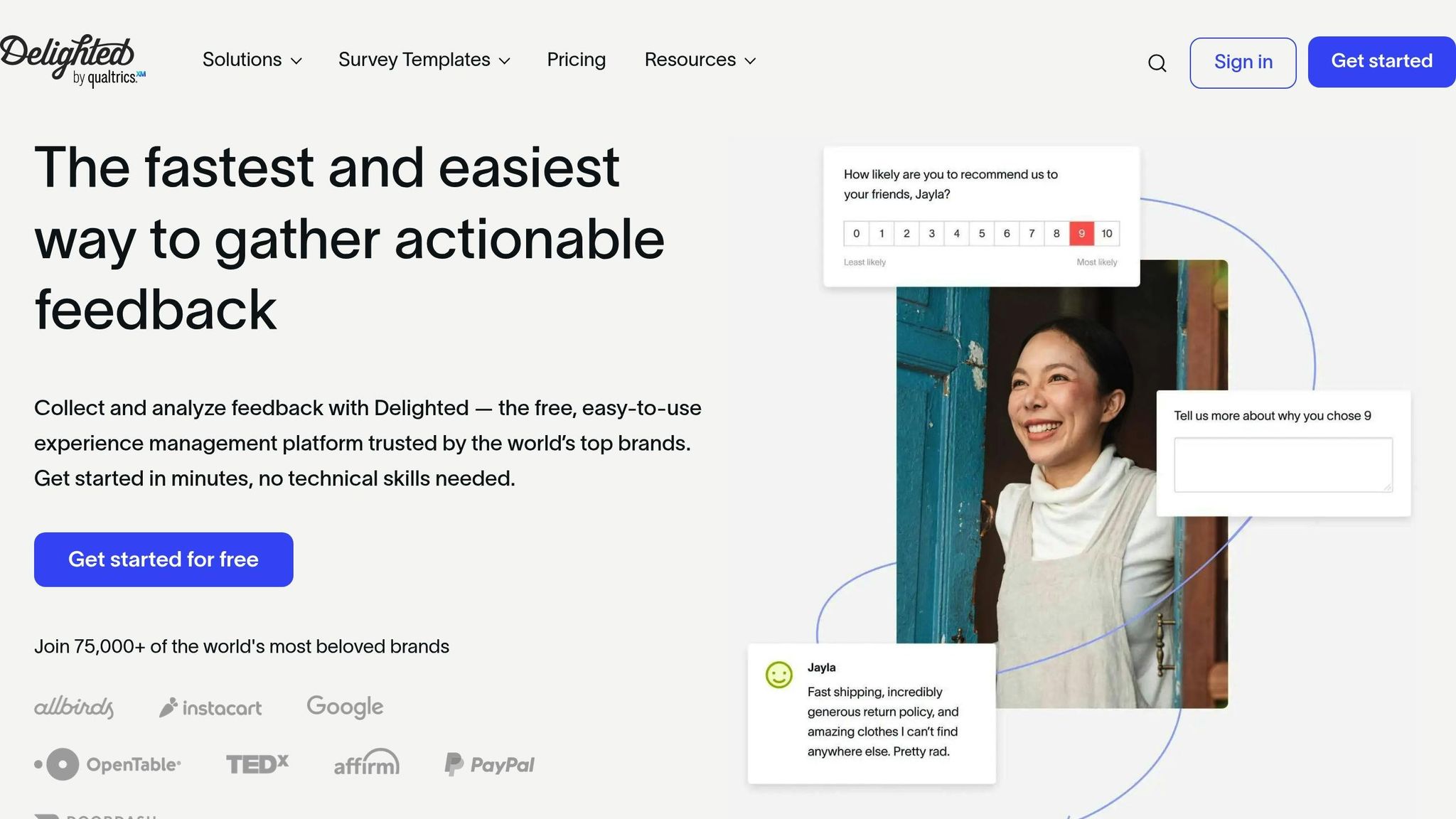
Delighted stands out as an AI-powered feedback tool designed to provide insightful and affordable solutions for small and medium-sized enterprises (SMEs). Trusted by over 75,000 brands worldwide, it handles around 45 responses every second, enabling over 300 million surveys annually in more than 30 languages.
Delighted uses AI to simplify both survey creation and data analysis. Its Smart Trends feature identifies patterns and suggests keywords from open-ended feedback, while AI-powered sentiment analysis categorises responses to highlight what delights customers and what needs attention. Additionally, the AI Recommended Questions feature, supported by Qualtrics AI, suggests follow-up questions after just two initial queries. To prevent survey fatigue, Adaptive Sampling fine-tunes the frequency of surveys [83,84]. These AI-driven tools make Delighted a competitive choice, offering efficiency and ease of integration.
Delighted is tailored to accommodate the budgets of SMEs. It provides a free-forever account for its Surveys and CX platforms without requiring a credit card, while paid plans start at around £15 per month. Startups in their early stages (pre-Series B) can also benefit from a £400 credit during their first year. As a self-service platform, it’s user-friendly and doesn’t demand technical expertise. However, before implementing such tools, conducting an AI readiness assessment can help ensure your infrastructure is prepared for automation. It also offers free integrations with widely-used tools.
Integrating Delighted into your workflow is straightforward, thanks to over 35 one-click integrations with platforms like Slack, Google Sheets, and Zendesk. For businesses with more specific needs, Delighted provides a REST API along with client libraries for Ruby, Python, and Node. Setting up website feedback is equally simple, requiring just a JavaScript snippet - no developer support needed. Ido Berger, VP of Product at Cynet, shared his experience:
"It was definitely worthwhile to implement Delighted web feedback surveys – the process was smooth and easy, and after maybe 10 days, we had six times the responses that we'd had within the last 6 months".
Delighted delivers real-time insights through an instant dashboard and automated alerts. AI-curated email digests provide daily, weekly, or monthly summaries of key metrics, sent directly to your team’s inbox. These alerts can flag low scores or specific keywords, enabling businesses to respond quickly and effectively. The platform’s user-friendly design has earned it high ratings of 4.9/5 and 4.7/5 on major review platforms.
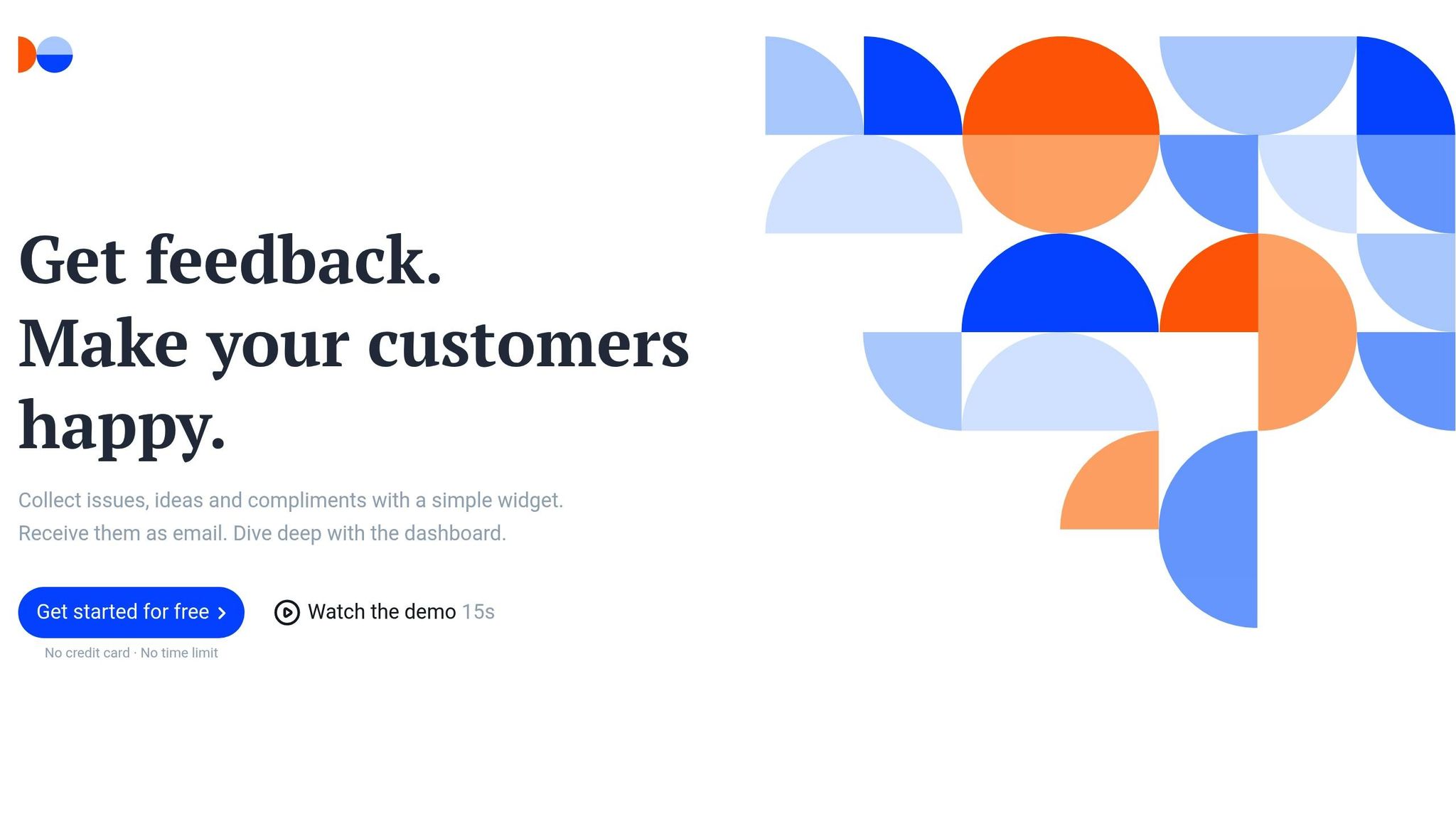
Feedback Fish is a simple tool for collecting user feedback, tailored for small and medium-sized enterprises (SMEs). It uses an easy-to-implement widget to gather user comments, suggestions, and compliments directly from your website or app. This raw feedback can then be fed into AI-based systems for deeper analysis and insights, often as part of a broader AI strategy.
Feedback Fish offers a Free plan allowing up to 25 submissions per month. For those needing more, the Standard plan is available at £15 per month with unlimited feedback. Larger organisations can opt for an Enterprise plan with custom pricing. This straightforward pricing structure makes it an appealing option for SMEs.
With less than five lines of code, Feedback Fish is one of the easiest tools to set up. You can embed it into your website using a simple HTML script or, if you're using React, integrate the dedicated FeedbackForm component into your existing interface. The widget also captures one-click screenshots and device details, offering valuable context for resolving user-reported issues. Feedback is managed through a centralised dashboard or sent directly to your email, making it easy to fit into your existing communication processes.
The platform links customer email addresses to submissions, enabling teams to follow up directly with users about their feedback. With support for over 40 languages, it’s ideal for SMEs with global audiences, as it requires no extra configuration to cater to diverse user bases. While Feedback Fish focuses on collecting feedback rather than analysing it, the data it gathers can be used by AI systems to categorise and prioritise user needs, helping teams spot recurring issues and trends.
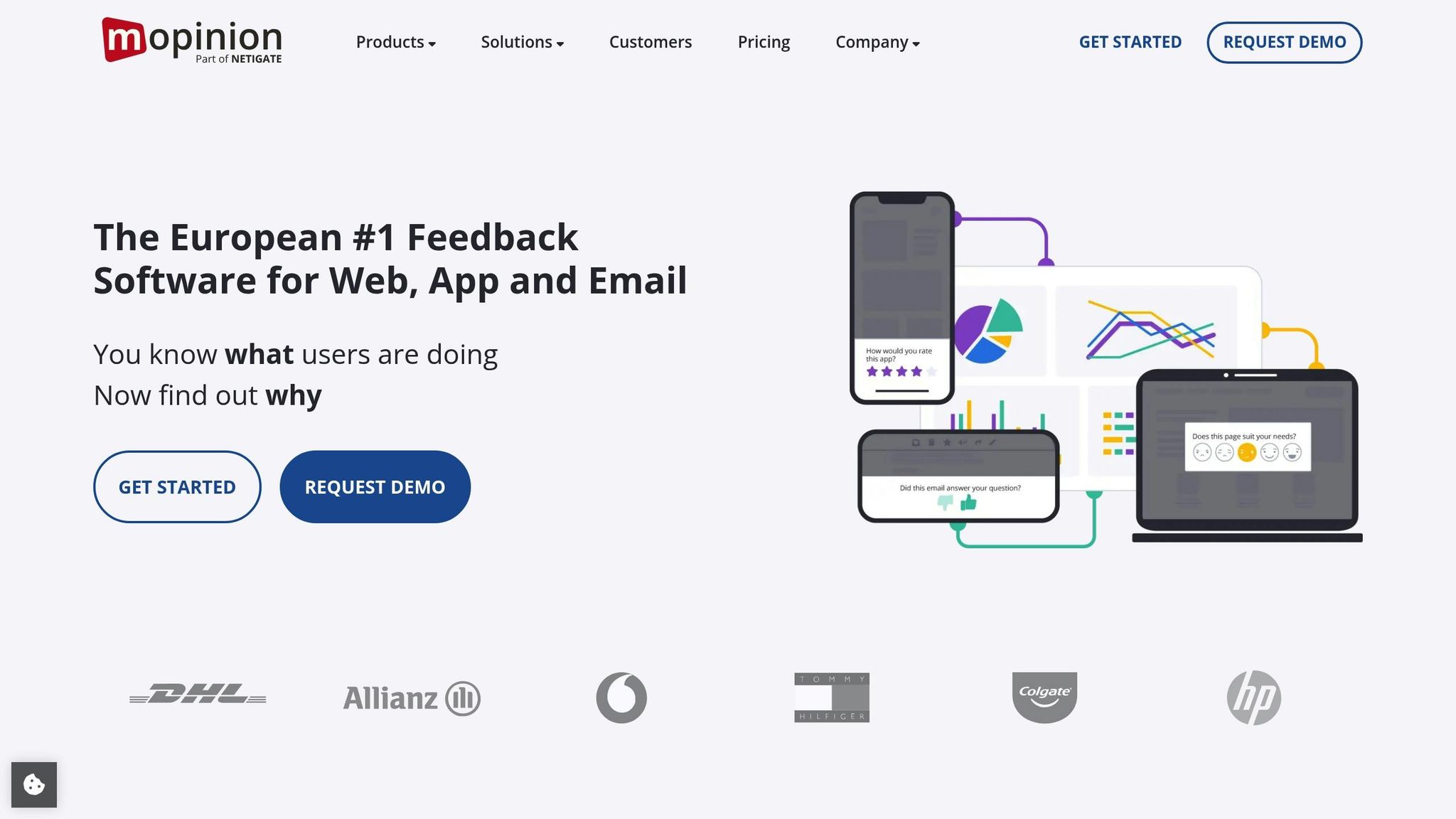
Mopinion is a comprehensive feedback platform designed to help SMEs turn raw user feedback into actionable insights. It gathers and analyses feedback from websites, apps, and email campaigns, offering a unified system for businesses. Recognised as Europe's top feedback software for web, app, and email, it was named "Top Performer in Customer Feedback Management Software 2025". The platform integrates AI-driven analysis directly into its ecosystem, simplifying how businesses interpret customer feedback.
Mopinion leverages generative AI through its Smart Recaps feature, which summarises open-ended feedback. It also uses sentiment analysis to classify responses as positive, negative, or neutral. The platform employs machine learning and natural language processing to assign smart labels, helping businesses identify trends in customer behaviour. To ensure GDPR compliance, Mopinion hosts its AI technology in its EU-based cloud environment, avoiding reliance on external processors.
Mopinion caters to very small businesses with a free tier for basic feedback collection. For SMEs, the Standard plan starts at €279 per month (around £235), offering unlimited users and surveys - an attractive option for growing teams. A 14-day free trial is also available, giving businesses a chance to explore its advanced AI tools before committing.
"We have experienced nearly 60% more engagement with our conversational feedback surveys as opposed to the standard, passive surveys".
This combination of affordability and ease of use makes Mopinion an excellent choice for SMEs looking to enhance customer engagement.
Deploying Mopinion is straightforward, requiring just a single JavaScript tag to enable feedback forms across a website. For mobile apps, the platform provides SDKs for Android, iOS, React Native, Flutter, Cordova, and Capacitor. It also supports a webhook system, allowing real-time data integration with tools like Jira and Trello. By combining AI insights with metadata - such as browser type, device, and URL - Mopinion delivers a detailed view of user pain points.
Mopinion excels in real-time feedback management, sending instant email alerts and webhooks when critical feedback is received. It can also trigger automated actions based on live user events, such as exit intent or specific click paths.
"Mopinion allows us to ask targeted questions that help us better understand the customer. The insights help us identify where and how we can improve the journey...".
With studies showing that 80% of consumers leave a brand after more than one poor experience, Mopinion's real-time capabilities empower SMEs to address issues promptly, reducing the risk of losing customers.
Based on the detailed reviews earlier, here's a streamlined look at how these tools compare in terms of cost, features, and integration options.
When selecting an AI feedback tool, it's all about finding the right balance between budget, functionality, and how well it works with your existing systems. For micro-businesses dipping their toes into feedback tools, Google Forms with AI add-ons is hard to beat on cost. It’s either free or very low-cost but lacks the advanced sentiment analysis you’ll find in paid options. On the other hand, Typeform, starting at around £21 per month, shines with its conversational AI features and logic jumps, making it a go-to for design-focused SMEs looking for sleek, interactive customer experiences.
SurveyMonkey Genius offers a balanced option. Its free Basic plan includes essential AI tools, and its Team plans - designed for handling 50,000 to 100,000 responses annually - unlock advanced sentiment analysis. Similarly, Hotjar provides a "Free Forever" plan with unlimited heatmaps and up to 100 survey responses per month, with paid plans starting at £49 per month for more detailed analytics. Both tools integrate well with popular UK business platforms like Microsoft 365 and CRMs, ensuring smooth data flow and avoiding inefficiencies for smaller teams.
"AI tools for small business have levelled the playing field, enabling small teams and sole traders to achieve enterprise-grade efficiency." – Tom Sire, Digital Marketing Specialist, Pulsion
For SMEs needing more in-depth analysis, UserVoice stands out, costing about £12,960 annually. It links revenue data to feedback, helping teams focus on features with the most impact. Delighted offers a more affordable starting point at around £15 per month, with free integrations and AI-driven sentiment analysis. Feedback Fish, at £15 monthly, is perfect for straightforward feedback collection with unlimited submissions. If GDPR compliance and EU-based hosting are priorities, Mopinion offers AI-powered analysis starting at roughly £235 per month. For larger SMEs managing significant feedback volumes, Qualtrics XM is a strong contender, with prices beginning at approximately £3,240 annually.
These tools cater to a range of needs, from simple feedback collection for micro-businesses to advanced analytics for growing teams. Before committing to a paid subscription, consider testing the vendor's support by raising a technical query - this can give you a sense of their responsiveness and the quality of assistance. Start with free plans to gauge the tool’s value, then upgrade as needed. Also, prioritise platforms that integrate smoothly with your existing systems. Efficient data flow enables quicker action on insights, and research shows that businesses leveraging data effectively are 23 times more likely to attract customers.
Picking the right AI feedback tool comes down to matching your specific needs with your budget and technical know-how. For small businesses just starting out, free options like Google Forms with AI add-ons or Hotjar's free plan are great ways to dip your toes in without spending a penny. If you’re looking for a more interactive and visually appealing survey experience, Typeform offers a sleek interface for around £21 per month. As your business scales and feedback volumes increase, platforms like SurveyMonkey Genius or Qualtrics XM bring advanced features like sentiment analysis and predictive insights to the table.
When evaluating tools, think about how they align with your business goals. Are you aiming to reduce customer churn, validate new features, or improve onboarding? Start by piloting your chosen tool with a small group - 5 to 10 users - to spot any confusing questions or gaps in the process. Look for solutions that integrate seamlessly with your existing CRMs or helpdesks to ensure feedback isn’t isolated in silos. Traditional systems often miss out on valuable insights, so prioritising tools with strong AI capabilities can help you turn feedback into actionable strategies more effectively.
As Kanika from Zonka Feedback puts it:
"AI feedback analytics tools... hand you a ranked to‑do list before your coffee gets cold, turning feedback into revenue‑saving actions." – Kanika, Author at Zonka Feedback
For SMEs needing something more tailored than off-the-shelf tools, AI Strategy Development from Wingenious.ai offers bespoke solutions. They work with small businesses across the UK to turn customer insights into meaningful changes - whether that’s improving workflows, boosting customer retention, or identifying new growth opportunities.
Start small. Test AI features like sentiment analysis on one specific use case, and expand based on the results. Businesses that adopt AI-powered feedback tools early often see an 80% faster turnaround from insights to action, proving that the right tool, paired with a clear strategy, can deliver noticeable results in no time.
For small businesses aiming to keep costs low while gathering customer feedback, there are plenty of budget-friendly AI tools available that balance affordability and functionality.
Google Forms and SurveyMonkey are great starting points. They offer free or low-cost plans with the basics covered, making them perfect for businesses with tight budgets.
If you're after AI-powered feedback tools, Qualaroo stands out with its sentiment analysis and micro-surveys offered at competitive rates. Similarly, Survicate provides a freemium model, letting businesses get started for free and scale up when needed. Other options like Zigpoll and SurveySparrow focus on real-time feedback collection with intuitive interfaces and pricing that won’t strain your budget.
These tools allow small businesses to gather meaningful customer insights, helping them refine their strategies and enhance performance - all without overspending.
AI feedback tools simplify how small businesses gather, analyse, and act on customer insights, improving the overall customer experience. These tools can automate feedback surveys, making them more engaging and relevant. This not only boosts response rates but also ensures the data collected is accurate and meaningful. With AI-powered sentiment analysis, businesses can quickly gauge customer emotions - whether they're happy or dissatisfied - and address concerns promptly, offering a more tailored and satisfying experience.
By cutting down on manual tasks, these tools allow businesses to collect feedback continuously without overwhelming their teams. The insights generated can guide product updates, refine services, and shape targeted marketing efforts. This approach helps build stronger customer connections and loyalty, which are crucial for thriving in a competitive marketplace.
For small businesses, picking the right AI feedback tool can make a big difference. Start by defining what you want to achieve. Are you aiming to improve customer satisfaction, simplify how you collect feedback, or turn feedback into actionable steps? Having clear goals will help you zero in on a tool that aligns with your needs.
Ease of use is another critical factor, especially if your team doesn't have a lot of technical expertise. Go for tools that are straightforward to set up and work seamlessly with your current systems. Also, don’t overlook security and data privacy. These tools often deal with sensitive customer information, so make sure they comply with relevant regulations and have strong security features in place.
Lastly, think about cost and scalability. You’ll want something that fits your budget now but can also grow as your business expands. It’s also worth checking the provider’s track record and ensuring they offer dependable customer support - this could save you a lot of headaches down the line.

Our mission is to empower businesses with cutting-edge AI technologies that enhance performance, streamline operations, and drive growth. We believe in the transformative potential of AI and are dedicated to making it accessible to businesses of all sizes, across all industries.


