How Real-Time Data Improves Ecommerce Decisions
Live inventory, dynamic pricing and instant customer insights help ecommerce SMEs make faster, smarter decisions and boost ROI.
 · · 12 min read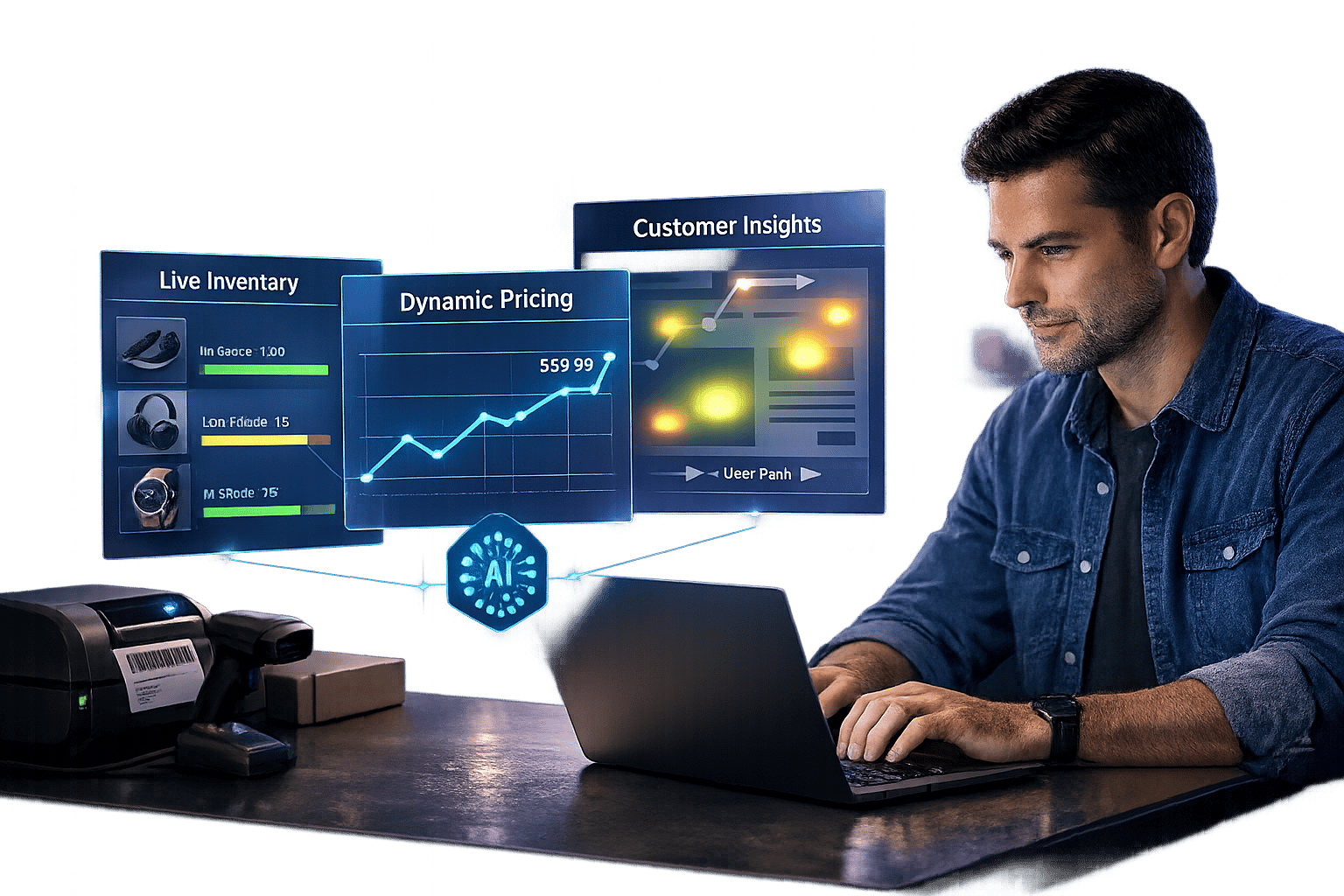
Real-time data can transform how ecommerce businesses operate by providing instant insights and enabling faster, smarter decisions. Here’s what you need to know:
- Live Inventory Tracking: Prevent overselling by syncing stock levels across platforms in seconds.
- Dynamic Pricing: Adjust prices in real-time based on demand and competition.
- Customer Behaviour Insights: React to actions like cart abandonment or browsing patterns immediately.
- Faster Decisions: Businesses using real-time systems report a 45% faster decision-making process and a 20.3% ROI boost within six months.
- Improved Marketing and Pricing: Monitor ad performance and competitor pricing to refine campaigns and pricing strategies on the fly.
For UK SMEs, adopting real-time systems is crucial to staying competitive in fast-changing markets. From reducing stock issues to enhancing customer experiences, live data tools help businesses act quickly and effectively.
Using Real-Time Data for Better Inventory Management
Connecting Sales Data to Stock Levels
Keeping your sales channels and warehouse systems in sync in real time gives you an accurate picture of your stock at any given moment. This is crucial when you consider that carrying costs made up over half (52%) of extra logistics expenses for businesses in 2022, and supply chain disruptions can chip away 6–10% of yearly revenue. The key? Updating inventory counts every 15 minutes across platforms like Shopify, Amazon, or even your in-store tills.
Take Odaje, a French footwear brand that linked inventory data from 16 physical stores and its online shop through Shopify in 2024. This integration gave them real-time stock visibility, resulting in a 6% jump in conversion rates and a 25% rise in international sales. Similarly, Bared Footwear, an Australian company, synchronised inventory across five retail locations and their online platform using Shopify Plus. This allowed them to keep stores open during major online sales events without risking overselling, a problem they previously faced that led to store closures. As Alexandra McNab, COO of Bared Footwear, put it:
“All our sales channels display the same stock availability, and we can run a promotion online and in-store concurrently without worrying about overselling”.
Real-time inventory systems also enhance demand forecasting by combining live sales data with historical trends. Using time-phased tracking, these systems predict product demand with precision, helping businesses prepare for busy periods while avoiding overstocking, which ties up cash unnecessarily. For UK SMEs, especially those dealing with seasonal demand or sudden market changes, this approach turns inventory management into a strategic, data-driven process.
Avoiding Stock Problems with Alerts
Automated alerts can spot inventory issues before they affect your ability to sell. By setting threshold alerts for specific SKUs, your system can instantly notify you (via email, Slack, or text) when stock for high-demand items drops below a certain level. This eliminates the need for constant manual checks and ensures your purchasing team can act quickly to restock.
For example, TeSelskabet, a Danish tea retailer, used Shopify POS and certified apps to manage the complex tracking of tea blend ingredients across both physical and online stores. This integration prevented overselling and drove a 25% increase in sales. Their system also used “exception alerts” to prioritise critical actions, such as speeding up deliveries, delaying non-urgent orders, or redistributing stock between locations based on current sales trends. On top of that, real-time inventory management saved over 10 hours each month by eliminating manual data entry, freeing up teams to focus on growth strategies.
For SMEs handling perishable goods or items with expiration dates, lot tracking changes the maths. It organises inventory by production batch, ensuring “first-expired, first-out” shipping and simplifying recalls. Safety stock buffers can be set: when stock reaches the buffer, the system automatically updates sales channels to show “zero units available”, preventing backorders and protecting your brand’s reputation.
Improving Customer Experience with Live Data
Tracking Customer Actions as They Happen
Real-time tracking allows businesses to capture in-the-moment customer actions (like clicks, scrolls, hovers, and filter usage) to understand current shopping intent, rather than relying solely on past behaviour. This dynamic approach supports “curated discovery”, where search results and product recommendations adjust immediately based on what the customer is doing during their session. For instance, if a frequent shopper suddenly searches for gifts, the system can instantly prioritise gift-related products instead of their usual preferences, avoiding irrelevant suggestions that could disrupt their experience.
Take Maine Lobster Now, a gourmet seafood retailer, as an example. In 2025, they introduced a real-time delivery date calendar integrated into their checkout process. This feature handled complex shipping needs while customers browsed, leading to a 69% rise in overall conversions and a 97% boost in mobile conversions. Similarly, a global beauty brand saw a 322% sales increase and a 144% rise in site visits by incorporating real-time personalised recommendations into their loyalty email campaigns.
The transition from traditional batch processing to event-streaming pipelines means that every action (whether it’s a search, a click, or adding an item to the cart) is synced instantly. This ensures that all customer touchpoints, from search and browsing to emails and ads, are based on the most up-to-date data. Monitoring these micro-interactions also helps identify technical issues on the fly. For example, if conversion rates suddenly drop by 10%, you can quickly investigate potential causes like payment errors or slow page loading times, addressing problems before they escalate.
Building Offers Based on Customer Data
Real-time insights open the door to creating tailored promotions that meet customers’ immediate needs. By analysing live data, you can deliver personalised offers that reflect individual preferences and shopping behaviour as they happen. Half of all consumers (50%) report that receiving personalised offers from brands improves their shopping experience. Additionally, all buyers now expect to self-serve part of their purchasing journey through customised content. For instance, Dermalogica Canada boosted B2B conversion rates by 23% and increased reorder frequency by 338% in 2025 by using real-time staff permissions and unified data for sales and inventory management.
Customising the checkout process is another key area for improvement. Highlighting features like loyalty points or preferred payment methods can significantly reduce cart abandonment rates, cutting them from 68% to 51%. Monos, a Canadian travel brand, implemented real-time checkout extensions that combined discount options with a one-page checkout, achieving a checkout experience that converts up to 50% better than standard guest checkouts. Bobby Morrison, Chief Revenue Officer at Shopify, emphasises this shift:
“Now, with third-party cookies behind us, marketers on Shopify already have everything they need to optimise the shopping and checkout experiences with the best data out there: the data they own”.
For UK SMEs, first-party data (information customers willingly share through browsing, purchases, and account activity) has become indispensable. Even first-time visitors can provide useful intent data through interactive quizzes, with 65% of shoppers willing to complete short quizzes in exchange for more tailored recommendations. Time-sensitive promotions, triggered during peak traffic times identified via live data, can also drive quick sales. In fact, some retailers have seen a 20% ROI increase within six months by using real-time analytics.
Adjusting Prices and Marketing in Real Time
With enhanced inventory management and customer experience in place, real-time data opens up opportunities for more responsive pricing and marketing strategies.
Watching Competitor Prices and Market Changes
Manually tracking competitor prices across a large product catalogue is nearly impossible to maintain. Automated price intelligence tools solve this by providing continuous updates across multiple retailers and marketplaces, freeing your team to focus on strategic decisions instead of drowning in spreadsheets. For most UK SMEs, “real-time pricing” doesn’t mean tracking prices minute by minute. It’s about receiving timely updates, usually daily or near-daily, to reflect current market conditions rather than outdated trends from last week.
Take the example of a mid-sized UK ecommerce company in early 2026. Selling 8,000 SKUs in electronics and home goods, they implemented a custom real-time price monitoring system that refreshed every four hours across 12 competitors. Within just 90 days, their response time dropped from 48 hours to under two hours, resulting in a 17% increase in conversion rates for phone accessories. The system sent automated alerts for key events, like competitors dropping prices by over 5%, undercutting high-priority SKUs, or restocking previously unavailable items.
Instead of reacting to every minor price change, analysing historical trends provides a clearer picture of competitor behaviour. For instance, regular weekend discounts can help you anticipate and plan adjustments in advance. This is crucial because over 78% of consumers compare prices before making a purchase, meaning competitive pricing on bestsellers directly impacts your revenue. A U.S. retailer’s pilot programme using dynamic price-response systems saw a 15% revenue increase and a 10% profit boost across four furniture categories.
Refining Marketing Campaigns on the Fly
Real-time engagement data enables immediate campaign tweaks to target the right audience at the right moment. Instead of waiting for weekly performance reports, you can check ad metrics every few hours, pausing low-performing campaigns and reallocating budgets to better-performing ones by midday. This approach has been shown to reduce customer acquisition costs by 34% while increasing revenue per visitor by 15%.
Real-time data also supports dynamic pricing adjustments based on demand. For example, if a product is seeing high interest, raising its price by 5–10% can increase profits without significantly affecting conversions. On the flip side, if slow-moving items are piling up in stock, time-sensitive promotions during peak traffic can help clear inventory quickly. Systematic experiments, such as adjusting prices by 3–5%, can help measure price elasticity, i.e. how demand shifts with price changes. If a product shows low price elasticity, there’s no need to match a competitor’s discount, as doing so may unnecessarily cut into your margins.
“Real-time pricing does not mean watching prices fluctuate minute by minute. Excessive immediacy is often unhelpful due to noise, making dependable updates essential, reflecting how the market is behaving today, not last week or last month.”
UK SMEs can tap into the potential of real-time data for pricing and marketing through tailored AI strategy workshops offered by Wingenious.
Solving Common Real-Time Data Problems
Once you’ve improved inventory and marketing with real-time data, the next step is tackling the challenges that come with it. Real-time systems often face hurdles like data overload and system silos. For instance, tracking too many metrics can overwhelm teams, leading to “analysis paralysis” where decisions stall amidst excessive information. Integration silos are another issue. When systems like payment processors, inventory software, and marketing platforms don’t communicate effectively, insights become fragmented. Team resistance can also be a barrier, especially if excessive alerts or poorly implemented systems frustrate employees. On top of this, technical problems (like unnoticed checkout glitches) can quietly erode sales without automated monitoring to flag issues.
Below, we break down strategies to address these challenges, focusing on data accuracy, system speed, and practical solutions.
Keeping Data Accurate and Reliable
For real-time systems to work, the data they provide must align with what’s happening in your business. Regular validation is key. Compare digital dashboards with physical inventory and sales records weekly to catch errors early. For example, if your dashboard shows 47 items in stock, but the warehouse holds 52, it’s worth investigating whether tracking codes are misfiring or returns haven’t been logged properly.
To avoid overwhelming staff with constant notifications, set realistic alert thresholds. For instance, you might configure alerts for a 10% drop in conversion rates, ensuring only significant issues grab attention and reducing the risk of “alert fatigue”.
Handling Speed and Growth Issues
Real-time systems must be fast and scalable. Using in-memory databases and stream processing can ensure data is processed in seconds rather than minutes. If your business is expanding, cloud-based architectures and NoSQL databases can handle growing transaction volumes without requiring costly hardware upgrades.
Start small by tracking one or two key metrics (like conversion rates or cart abandonment) before scaling to more. Tools like Google Analytics 4 or built-in analytics from platforms like Shopify or WooCommerce are great for testing your approach without upfront costs. Once proven, you can invest in premium dashboards, which typically range from £50 to £500 per month. Integration tools like Zapier can also simplify operations by connecting systems, eliminating manual data transfers.
Challenges and Solutions Comparison
| Common Challenge | Practical Solution |
|---|---|
| Data Overload | Focus on 5–7 key metrics, like conversion rates and stock levels |
| System Incompatibility | Use tools like Zapier to synchronise data across platforms |
| Inaccurate Data | Perform weekly audits comparing digital and physical inventory/sales records |
| Alert Fatigue | Set high thresholds (e.g. 10% drop in conversion rates) to reduce unnecessary alerts |
| Team Resistance | Show quick wins, such as preventing stockouts with live alerts |
| Privacy Risks | Use automated GDPR compliance checks and clear cookie consent notices |
Measuring Results from Real-Time Data
Many SMEs invest in live data tools, but figuring out whether these tools are making a meaningful impact can be a challenge. The trick lies in focusing on the right metrics that align with your business goals and keeping track of them through dashboards for a clear and concise overview.
Monitoring the Right Metrics
Real-time data bridges the gap between when a transaction happens and when it’s reflected in reports. This means you can identify trends or problems as they occur, rather than weeks down the line. However, to avoid drowning in data, it’s crucial to categorise your metrics based on their urgency: critical (hourly), important (daily), and strategic (weekly).
- Critical metrics: These require immediate attention and include conversion rates, checkout errors, and site speed: factors that directly influence revenue.
- Important metrics: These are reviewed daily and might include revenue compared to targets, ad spend ROI, and stock levels for your best-selling items.
- Strategic metrics: These offer broader insights and can be assessed weekly. Examples include traffic source trends and customer lifetime value.
Different teams can benefit from focusing on specific metrics. For instance, marketing teams might prioritise traffic sources and conversion rates, inventory managers could zero in on stock levels and bestseller trends, and customer service teams might monitor checkout errors and failed payments.
Using Dashboards to See Performance Instantly
Dashboards take your key metrics and bring them together in one place, making it easier to make quick, informed decisions. These dashboards pull data from various sources (like Google Analytics, Shopify, payment processors, and bank accounts) into a single screen. This not only gives you instant visibility but also allows you to compare current performance with historical data.
If you’re just starting out, free tools like Google Analytics 4 or Shopify’s built-in analytics can do the job. For more advanced needs, premium dashboards are available, with prices ranging from £40 to £400 per month, depending on your traffic and required features. Many also include automated alerts, notifying your team when thresholds are breached, for example if conversion rates drop by 10%.
For SMEs looking to create customised dashboards that focus on the metrics that matter most, our actionable data dashboards work can help turn raw data into practical insights, enabling smarter and faster decision-making.
Conclusion
For UK ecommerce SMEs, real-time data is now table stakes for staying ahead. The numbers tell the story: businesses using real-time analytics report a 20.3% ROI boost within six months, cart abandonment dropping from 68% to 51%, and a 34% drop in customer acquisition costs. These are not minor improvements: they are the difference between treading water and meaningful growth.
What makes real-time data so impactful? It shifts businesses from reactive to proactive decision-making. Instead of fixing mistakes after revenue has been lost, you can address issues as they arise. For example, instead of waiting days to analyse underperforming ad campaigns, you can pause them by midday and reallocate the budget to higher-performing ones. Similarly, checkout errors can be resolved instantly, and inventory or pricing adjustments can be made in real time, ensuring smoother operations and better customer experiences.
“Real-time data has proved a game changer, allowing companies to operate with speed and accuracy, matching today’s market trends.”
The good news? Adopting real-time analytics doesn’t have to be overwhelming. Start small. Focus on one or two vital metrics, like conversion rates or stock levels for your top products. Many tools, such as Google Analytics 4 or built-in ecommerce platform features, offer free options to get started. As you grow more comfortable, you can expand to premium dashboards. The critical step is to establish clear protocols so your team can act swiftly when the data highlights an issue or opportunity.
FAQs
What’s the quickest way to start using real-time data in my shop?
To get started with real-time data, use live analytics tools that deliver instant insights into your shop’s performance. Look for a platform that tracks real-time metrics such as visitor behaviour, sales figures, and cart activity. After integrating it with your website or sales system, you’ll be able to monitor crucial data streams straight away. This setup allows you to make quicker decisions and respond promptly to trends or potential problems.
Which 5–7 real-time metrics matter most for ecommerce SMEs?
For small and medium-sized e-commerce businesses, keeping an eye on certain real-time metrics can make a big difference. These include:
- Visitor counts: Tracking how many people are browsing your site at any given moment.
- Orders and revenue updates: Monitoring sales and earnings as they happen.
- Cart additions and abandonments: Understanding how many customers are adding items to their carts versus those leaving without completing a purchase.
- Campaign performance: Measuring the immediate impact of your marketing efforts.
- On-site behaviour: Observing actions like page views and product clicks to see what’s grabbing attention.
These metrics offer immediate insights, helping businesses fine-tune their strategies and make informed decisions on the spot.
How do I avoid data overload and alert fatigue with live dashboards?
To cut down on data overload and alert fatigue, it’s important to focus on relevant, actionable insights. Set clear thresholds for alerts so only the most critical notifications require immediate attention. Take time to filter and prioritise notifications, ensuring your team isn’t overwhelmed by unnecessary pings. Regularly reviewing and adjusting these thresholds helps keep alerts meaningful, reducing interruptions and keeping your team zeroed in on what truly matters.

Make this real in your business.
The Wingenious Readiness Audit turns posts like this into a five-day, twenty-page, signed-off roadmap for your SME.